


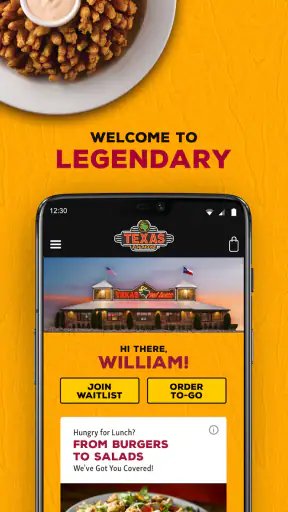
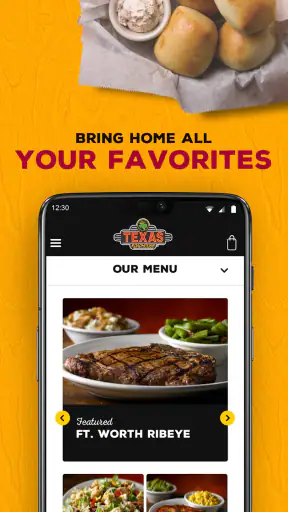
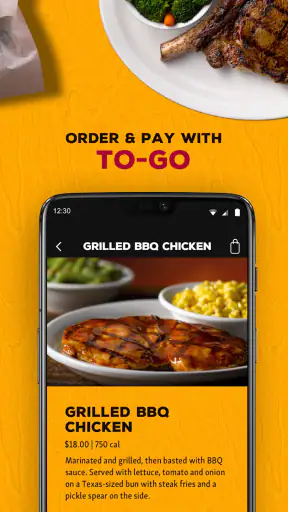
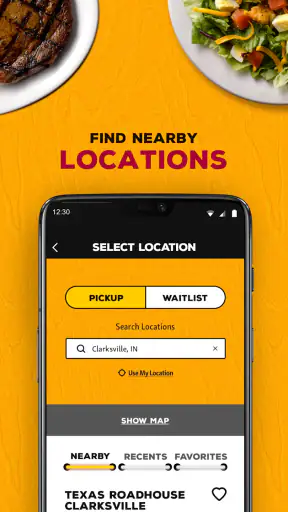
I downloaded Texas Roadhouse expecting a straightforward restaurant companion, and that is exactly where its appeal begins. It is a free Food & Drink app from Texas Roadhouse, Inc., built around making the restaurant’s familiar experience easier to access from a phone. I would not describe it as an app that tries to replace the visit itself. Its value comes from reducing small bits of friction before you decide what to eat, where to eat, or how to manage a return visit.
That distinction matters because restaurant apps often feel exciting for a few days and then disappear into a folder. My first impression here was positive, but the more important question became whether it deserved a permanent place on my phone. The answer depends heavily on how often Texas Roadhouse is already part of your routine. For an occasional guest, it is useful when a visit is being planned. For a regular, it has a better chance of becoming a habit because the restaurant, rather than the software, supplies the recurring reason to open it.
What the first week feels like
The first-week appeal is easy to understand. Instead of starting with a general search, opening a browser, or relying on a third-party restaurant directory, I can go directly to a Texas Roadhouse-focused experience. That narrower purpose is helpful when I already know which restaurant I am considering. It keeps the decision centered on the chain’s own Legendary favorites rather than surrounding the menu with unrelated restaurants, sponsored results, or delivery options from other businesses.
I also like the psychological simplicity of a dedicated restaurant app. When I am deciding where to eat with family or friends, the conversation is usually not about discovering every possible option in town. It is more often, “Should we go to Texas Roadhouse?” Once that question has been answered, a focused app makes more sense than a broad restaurant platform. I can use it as a quick confirmation point instead of sorting through a large marketplace.
One realistic use case is a busy weekend evening. Someone in the household suggests going out, another person wants to know what kind of meal is available, and nobody wants to spend several minutes jumping between search results. I would open the app before leaving, use it to orient myself around the restaurant’s offering, and then make the decision. That is not a dramatic productivity gain, but it is exactly the kind of small convenience that makes an app feel worthwhile during a real day.
The app is also approachable for a wide audience. Its content rating is Everyone, and the minimum operating-system requirement is Android 7.0, so it is not positioned as a niche tool for only the newest phones. I would still judge the experience on the condition of the individual device, but the broad compatibility makes it easier for a family to use without treating the app as a technical project.
Texas Roadhouse, Inc. has kept the product recognizable rather than turning it into an overloaded food marketplace. That is a strength during the first week because I do not have to learn a complicated system before getting any benefit. The trade-off is that people looking for a universal restaurant planner may find the scope too narrow. This is an app for people interested in Texas Roadhouse, not a replacement for a general dining service.
Useful habits that are easy to miss
My most useful early habit was opening the app before the group had fully committed to the restaurant. That timing avoids using it only at the table, where the decision has already been made. It works better as a planning checkpoint: check the restaurant’s current offering, discuss choices, and then decide whether the visit suits the group. This is more practical than treating the app as something to install only when everyone is already seated.
A second useful approach is to use it for repeat decisions rather than one-time browsing. If I already know what I usually order, I do not need to explore everything every time. I can use the app to refresh my memory before leaving, especially when ordering for several people with different preferences. That makes the app less about novelty and more about reducing the back-and-forth that often happens when a group is hungry and undecided.
There is also a subtle trade-off between the official app and the usual alternatives. A search engine may be faster for finding a nearby location, while a general restaurant app may be better for comparing many businesses or arranging delivery. The dedicated Texas Roadhouse experience wins when I want the chain’s own presentation and information in one place. It loses when my real question is broader, such as “What restaurants are open nearby?” or “Which option has the lowest delivery cost?”
Why it may still matter after the novelty fades
Month-to-month value depends on repeat visits. I do not think this is the kind of app most people will open every day, and that is not a criticism by itself. A restaurant companion should be judged by whether it is useful at the moments when its subject becomes relevant. If Texas Roadhouse is a monthly destination for you, keeping the app installed can be reasonable. If you visit once a year, a mobile website or ordinary search may be enough.
The public response suggests that many people find the app worthwhile: it holds a 4.8 average from around 21 thousand ratings, with more than 5 million installs. Those figures do not tell me that every person will enjoy it, but they do show that the product has reached a substantial audience and has earned strong overall approval. I read that as evidence of solid everyday usefulness rather than proof that it is essential for every diner.
Its recurring value is strongest for households that return to the same restaurant for predictable reasons. Families may use it when choosing a familiar place for a casual meal. Friends may consult it before meeting. Someone who prefers checking food options privately before arriving may appreciate having a focused reference instead of asking the group to wait while menus are passed around. These are modest use cases, but they repeat naturally.
I would be less enthusiastic about installing it solely to replace a paper menu during a single visit. If the app is opened once and then forgotten, its long-term value is limited. The better question is whether it supports a pattern you already have. In my experience, apps connected to an existing habit last longer than apps that ask users to create an entirely new one.
The current version is 8.7.0, which gives the product a more maintained feel than an abandoned restaurant utility. I would not treat a version number as a guarantee that every screen will be perfect, but ongoing versioning is reassuring when deciding whether an app deserves storage space. It suggests that the developer continues to keep the experience active rather than leaving it as a one-time promotional download.
Where the official experience beats general alternatives
The clearest advantage over a broad restaurant app is focus. A general service is useful when I am comparing cuisines, prices, locations, and delivery choices across many businesses. Texas Roadhouse’s app is better when the decision has already narrowed to this one chain. I spend less time filtering irrelevant results, and the restaurant’s own identity remains central.
That focus can also make the app more comfortable for people who dislike crowded interfaces. A large marketplace often combines reservations, delivery, reviews, loyalty offers, maps, and unrelated recommendations. Those features can be valuable, but they can also bury the simple task of deciding what to eat. Here, the narrower purpose feels more direct.
On the other hand, I would choose a map app when location is the main issue, a delivery platform when I need a courier, and a general dining service when I want independent reviews across several restaurants. This is an important limitation, not a flaw to hide. The app earns its place by serving a specific restaurant relationship, not by winning every food-related task.
Another practical insight is that the app should be treated as a complement to those alternatives, not necessarily as a total replacement. I might discover the restaurant through a map, use the Texas Roadhouse app to examine the chain’s own offering, and then decide whether the visit makes sense. That three-step workflow is more realistic than insisting one app handle every part of dining research.
The maintenance burden is low, but not zero
Maintenance is one of the better parts of the experience. Because the app has a clear restaurant-specific purpose, I do not need to spend time customizing a complicated profile or organizing a large collection of saved content just to get started. I can install it, look around, and return when a visit is likely. That low setup burden supports the idea of keeping it available even if I only use it occasionally.
The price helps too: it is free, so the decision is mainly about storage, attention, and usefulness rather than a purchase commitment. I still would not install every free restaurant app automatically. Free software can become clutter when several chains each demand their own icon. The sensible approach is to keep this one if Texas Roadhouse is a recurring choice and remove it if months pass without a reason to open it.
I would also make a habit of checking the app shortly before a planned visit rather than relying on an old screenshot or memory. Restaurant information can be time-sensitive in ordinary life, and a current app session is more sensible than treating a previous browsing session as permanent. This is not a complicated maintenance routine; it is simply a good way to avoid making decisions from stale information.
Updates can create a small amount of friction. A newer version may improve stability or adjust the interface, but it can also mean that a familiar control moves. I generally prefer keeping a restaurant app updated when I use it regularly, while occasional visitors may reasonably install or update it only when planning a visit. The right balance depends on how central the app is to your routine.
The developer is Texas Roadhouse, Inc., which gives the app a direct connection to the restaurant brand rather than making it a third-party interpretation. That can be valuable for trust and consistency, especially when I want the official experience. It also means the app’s usefulness is tied to the developer’s priorities. If I want independent criticism, broad comparison, or community-driven recommendations, I would look elsewhere.
Small points that affect everyday use
One thing I would not do is open the app without a clear purpose and expect it to become entertaining on its own. It is a utility, not a social feed or a general food discovery game. The best workflow is intentional: decide whether I am planning a visit, checking food choices, or helping a group settle on an option. That mindset keeps the app from feeling disappointing simply because it does not behave like a broader platform.
I would also avoid making it the only source for a complicated group decision. If someone has strict dietary needs, a medical restriction, or a question that requires direct clarification, the app should be part of the preparation rather than the final authority. I can use it to narrow choices, then confirm anything important through the appropriate restaurant channel. This is a sensible boundary for any menu-focused tool.
For families, the app may be most useful before leaving home. Parents can review options while children are deciding, and the group can avoid turning the restaurant entrance into a long planning session. For solo diners, the benefit is smaller but still real: I can make a quicker decision without browsing a wide range of restaurants. For tourists or people unfamiliar with the chain, a general map and review service may provide more useful context first.
Where fatigue begins
The main source of fatigue is repetition. Once I know the restaurant, know the kind of meal I want, and have already formed a favorite order, there may be little reason to browse again. A dedicated app cannot manufacture new value every week without becoming noisy, and I would rather have a quiet tool than one that constantly pushes itself into my attention.
That creates a natural ceiling for long-term engagement. The app can support a restaurant habit, but it cannot make the restaurant itself more convenient in every possible way. If my biggest concern is waiting time, transportation, delivery, or comparing nearby alternatives, I may still need other tools. The app is helpful around the meal decision, but it should not be mistaken for a complete dining-management system.
Another possible frustration is the narrow brand boundary. People who enjoy trying independent restaurants may find the app irrelevant between visits. Even regular Texas Roadhouse customers may prefer using one general app for all their restaurants rather than maintaining several official apps. In that situation, the convenience of a dedicated experience has to outweigh the clutter of another installation.
I also think the app is less compelling for someone who already has a reliable personal routine. If I always check a saved note, call the restaurant, or use a favorite map service, adding another step may not improve anything. The strongest reason to switch is not loyalty to an app; it is a specific convenience that my existing routine does not provide.
Still, fatigue does not automatically mean failure. A restaurant app can be successful even if I open it only when a visit is being considered. The important test is whether it is easy to ignore when irrelevant and useful when needed. Texas Roadhouse performs best under that standard: it does not need to become a daily habit to justify its presence.
Who should keep it installed
I would recommend keeping it installed if you visit Texas Roadhouse regularly, often organize meals for a group, or prefer checking the restaurant’s own information before leaving home. It is especially suitable for people who want a focused experience rather than a crowded marketplace. The free price and Everyone rating make trying it low-risk, provided the restaurant is already relevant to your life.
I would be more selective if you dine there only occasionally. In that case, install it when you are planning a visit, use it to make the decision easier, and then reassess whether it has earned permanent space. There is no reason to keep a collection of restaurant apps that are rarely opened. The app’s value is practical, not sentimental.
I would skip it as a primary tool if you are mainly searching for restaurants outside the Texas Roadhouse brand, comparing independent reviews, arranging delivery, or finding the cheapest nearby meal. A general restaurant platform will serve those goals better. Likewise, if your phone has limited storage or you already have a smooth method for checking this restaurant, the dedicated app may add too little to matter.
The app is also not a substitute for personal judgement in special situations. When a group has allergies, accessibility concerns, or questions that affect health and comfort, I would use the app for preparation but verify the important details directly. That approach keeps the convenience while respecting the limits of a mobile restaurant companion.
My long-term verdict
After the first-week novelty fades, Texas Roadhouse remains useful because its purpose is clear. It does not need to compete with every food app. Its lasting value comes from being a direct, free way to prepare for visits to one familiar restaurant. The strong 4.8 average and audience of over 5 million installs support the impression that many diners find that focused role worthwhile.
My final judgement is positive but measured. I would keep it on my phone if Texas Roadhouse were part of my regular dining rotation, especially for family planning and quick pre-visit decisions. I would not keep it merely because it is free or because restaurant apps are fashionable. The app earns its space when it removes a recurring bit of uncertainty; otherwise, a browser, map, or general dining service may be enough.
What I appreciate most is the balance between low maintenance and useful specificity. I can ignore it for a while without losing the point, then return when a meal is being planned. That makes it more sustainable than an app that demands constant attention. Its weakness is equally clear: once the restaurant is not on my shortlist, the app has very little to offer.
My recommendation is simple: regular Texas Roadhouse guests should try it and judge it by their next few meal-planning decisions, while occasional diners should treat it as an on-demand utility rather than a permanent necessity. It does not transform dining, but it can make a familiar choice more organized and less tedious. For the right user, that modest convenience is enough to give Texas Roadhouse lasting value after the initial curiosity wears off.


